It often starts with something tiny. A sock on the floor. A mug abandoned on the coffee table. A chair that never quite slides back under the table after breakfast. You look around your home and suddenly realize you’re not walking through rooms anymore, you’re weaving through obstacles. The walls haven’t moved, but somehow the space feels like it shrank overnight. You can’t quite explain it, only that your shoulders feel a little tighter as you squeeze past the dining chair for the third time.
Then one day, you drag a single piece of furniture to a different spot. Ten minutes of effort. And the room exhales like it’s been holding its breath for years.
That tiny shift?
That’s the change almost no one tries first.
The invisible culprit that’s eating your space
The number one reason a home feels crowded isn’t always the amount of stuff. It’s placement. Where furniture lands on day one often becomes its “forever spot”, even if it doesn’t fit your life anymore. Sofas against the wall, TV opposite, dining table in the center, bed pressed into a corner.
We copy layouts we’ve seen elsewhere and then quietly adapt our bodies around bad circulation. We walk sideways between the couch and coffee table. We shimmy past the bed to reach the closet. Over time, that daily micro-friction feels like living in an overstuffed suitcase.
You don’t need a bigger home. You need a new route through it.
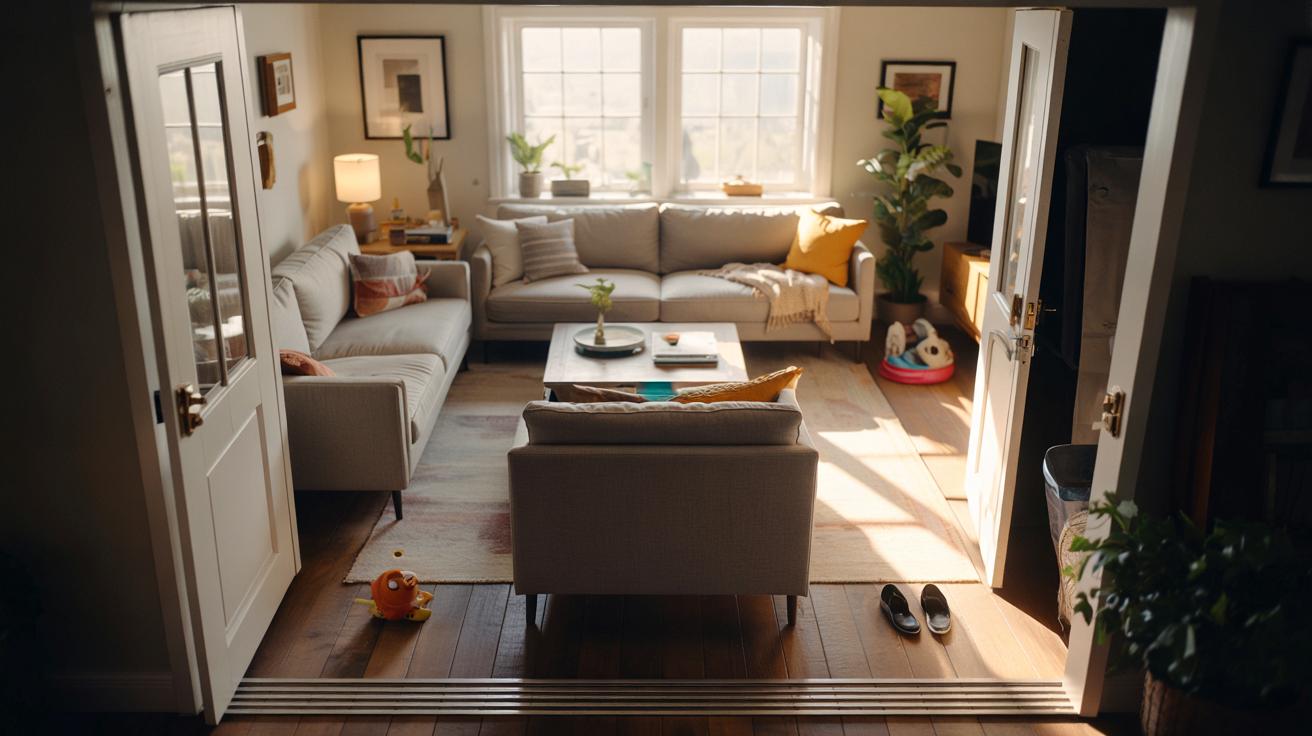
Picture a small living room with a huge sectional sofa pushed up against the longest wall. It looks logical on paper. Yet when guests come over, half the seating never gets used because the coffee table blocks access. People end up standing in the doorway, hovering awkwardly, drink in hand.
A designer walks in, rotates the sofa ninety degrees, pulls it away from the wall, and nudges the coffee table closer. Suddenly there’s a clear path from the entrance to the window. Same objects, same square footage. Different feeling.
Real estate agents know this trick. Staged homes aren’t emptier. They’re just arranged so movement feels effortless, even with the same or more furniture.
There’s a logic to why some rooms feel crushed and others feel generous. Our brains love clear lines of travel. When big pieces sit in the “flow zones” between doors, windows and main functions, every trip through the room costs you a tiny burst of attention. You’re constantly calculating: “Can I squeeze through there?”
When your main pathways are blocked, your home starts to feel like a storage unit with a sofa. Open those walking lines, and your nervous system relaxes before your conscious mind even registers why.
➡️ This baked dinner delivers warmth more than excitement
➡️ This profession pays modestly at first but becomes extremely lucrative over time
➡️ This natural fertilizer works slowly but strengthens plants from the roots up
➡️ This baked meal doesn’t try to impress, it just satisfies
➡️ “This warm dinner is what I cook when staying in feels right”
➡️ This baked recipe proves that simple cooking can still feel special
➡️ The cleaning behavior that quietly shapes your entire home
➡️ This simple habit helps you reset between busy moments
*Spatial calm is less about minimalism and more about how easily your body can move without negotiating with furniture.*
The one placement change that frees up surprising space
If your home feels crowded, start with this: pull your biggest piece of furniture away from the wall and out of the main traffic path. That’s it. That’s the move.
In the living room, this is usually the sofa. In the bedroom, it’s the bed. In the dining room, it’s the table. Shift that anchor piece so people can walk behind it, or so the circulation goes around the room instead of straight through your conversation zone.
The first minutes feel strange. Your brain screams, “This is wrong, the couch belongs on the wall.” Give it a day. You may be shocked at how much lighter the room feels once the main route is no longer slicing through the middle of your life.
Many people think “center of the room” means crowded. The opposite often happens. A bed that floats away from the wall, even by 20–30 cm, can suddenly unlock both sides for access. No more climbing over someone to get out. No more trapped bedside table.
Same for dining tables. When the table hugs one wall, chairs get jammed, people scrape and shuffle, and you lose usable surface because half the table becomes a “no man’s land”. Move it slightly toward the center, and the entire perimeter becomes active, inclusive seating.
Let’s be honest: nobody really measures their traffic paths with a tape measure every single day. You feel them with your feet. If your shoulders relax the moment you walk in, you’re on the right track.
There’s a quiet moment many people hit after moving furniture when they feel both relief and guilt. Relief because the room finally breathes. Guilt because they realize they lived for years accepting a layout that never truly worked.
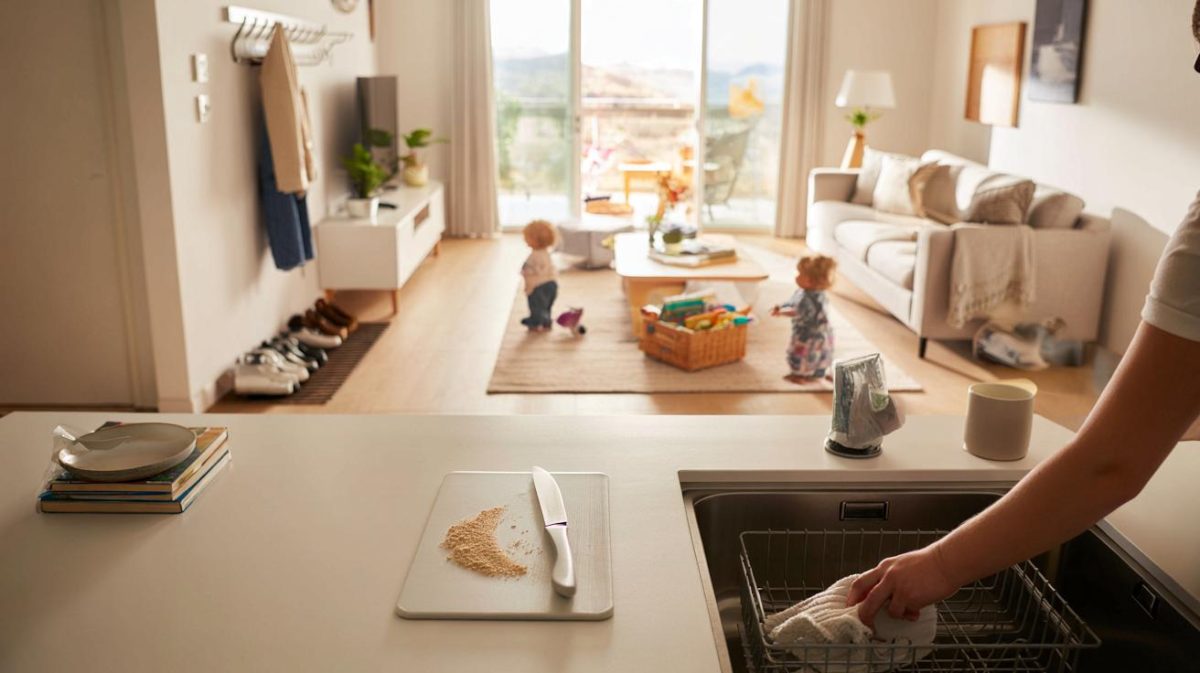
“I thought I needed to declutter everything,” says Laura, who lives with two kids in a 700-square-foot apartment. “Turns out I just needed to turn my sofa and move it 40 centimeters. I got rid of three boxes later, but the real shift came when I could walk from the front door to the window in a straight line without dodging toys and table legs.”
To test whether your main placement is helping or hurting, use this quick mental checklist:
- Can you walk from door to window without sidestepping furniture?
- Can every seat be reached without asking someone to stand up?
- Does any chair or corner feel “exiled” or awkward to use?
- Is your sofa or bed sitting in the exact route people naturally take across the room?
- Could you move the anchor piece 20–50 cm and improve at least one of these points?
One small adjustment on that list can feel like doubling your space, without getting rid of a single item.
A home that feels bigger without becoming emptier
There’s something quietly powerful about rediscovering space you thought you’d lost. Sometimes the answer isn’t ruthless decluttering or moving to a bigger place. It’s granting your body permission to move comfortably in the home you already have.
When you change the placement of that one big item, other choices often follow naturally. A side table that never really worked finds a better spot. A plant that blocked the balcony door shifts next to the sofa instead. Bit by bit, your layout starts to reflect how you actually live, not how the room “should” look from a catalog.
You might notice arguments shrinking too. Fewer “Can you move?” and “Why is this always in the way?” moments. Kids don’t crash into the same corner. Guests don’t hover in the hallway unsure where to stand.
We’ve all been there, that moment when you look around and wonder if the problem is the house or you. Often it’s neither. It’s a stubborn sofa, a bed glued to the wrong wall, a table guarding the only natural path. Shift the anchor, free the flow, and your home feels less like a tight container and more like a place that quietly, steadily has your back.
| Key point | Detail | Value for the reader |
|---|---|---|
| Move the anchor piece | Shift sofa, bed, or table away from main traffic lines | Instant feeling of more space without buying anything |
| Prioritize clear paths | Protect routes between doors, windows, and main functions | Less daily friction and a calmer, more usable home |
| Test with small shifts | Experiment with 20–50 cm moves before big changes | Low-risk way to discover layouts that truly fit your life |
FAQ:
- What if my living room is tiny and the sofa has to go against the wall?You can still open up space by sliding the sofa slightly closer to one corner, narrowing the coffee table, or creating a single clear path from door to window. Even a few centimeters of extra passing room can change how the space feels.
- Should I declutter before moving furniture, or after?Start by moving the main piece first. Once the circulation improves, you’ll see more clearly which objects are genuinely in the way and which actually work in the new layout.
- How wide should a walking path be?A comfortable target is around 80–90 cm for main routes and 60 cm for secondary ones. You don’t need to measure precisely; if two people can pass each other without twisting sideways, you’re close.
- What if my bed only fits on one wall?Even then, try centering it on that wall and avoiding any large furniture directly at the foot that blocks sight lines. Sometimes swapping sides of the room with a dresser or desk creates a big visual release.
- Does this work in rented apartments with strange layouts?Yes. Renters often benefit the most from smart placement. You may not be able to knock down walls, but you can still protect circulation paths, angle furniture, and pull key pieces away from doors so the space feels more open.