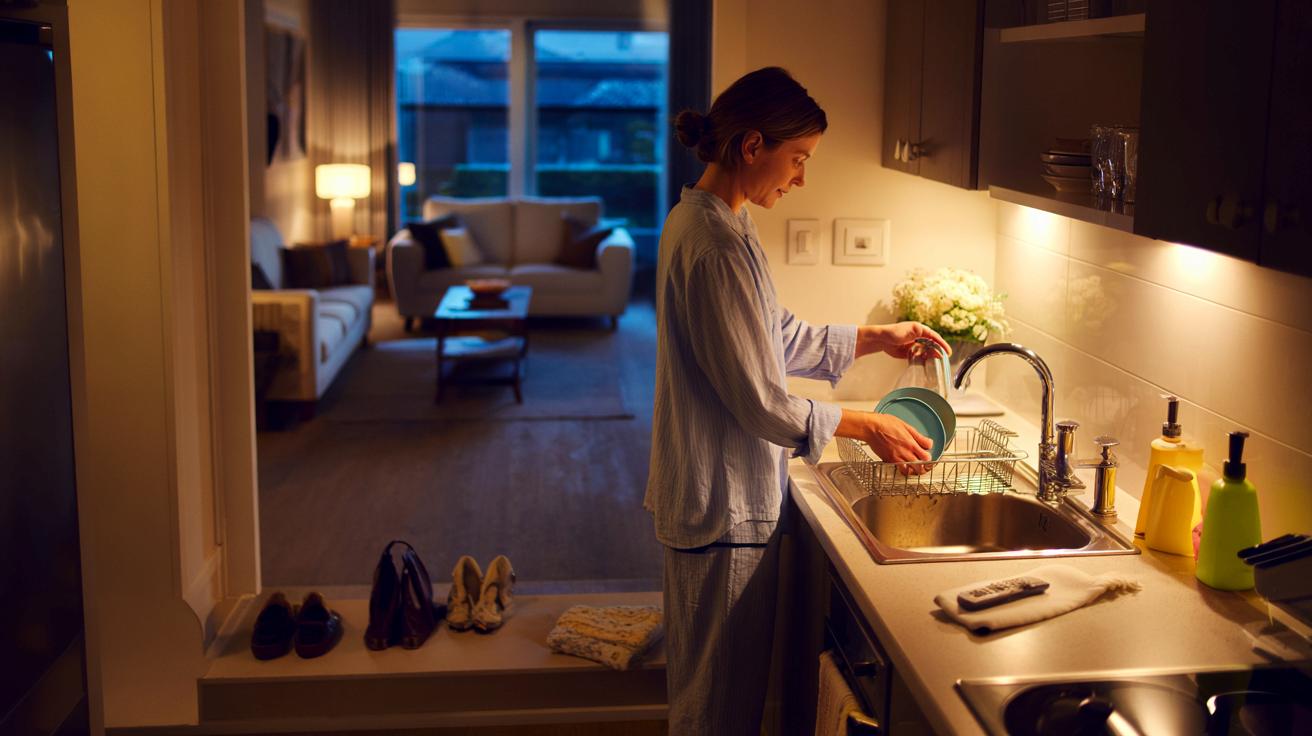
Around 10:30 p.m., my sink used to look like the aftermath of a student party. Plates stacked at weird angles, a pan “soaking” (code for: abandoned), crumbs stuck to the counter like they’d signed a lease.
I’d see it, sigh, and mumble the classic “I’ll deal with it tomorrow.”
Spoiler: tomorrow-me hated yesterday-me.
One night, exhausted and on autopilot, I changed one tiny thing in the way I ended my day. Not a miracle morning, not a 27-step cleaning routine. Just a new, almost boring, last gesture before sleep.
Two weeks later, my home felt different. I felt different.
The mess was still there. It just didn’t stand a chance anymore.
The tiny evening shift that changed everything
The real turning point didn’t happen on a weekend deep-clean.
It happened on a Tuesday, when I was already in pajamas, scrolling on my phone, staring at a random productivity post.
Someone mentioned a “closing ritual” for the day, like what cafés do before locking the doors.
Lights down, chairs up, surface wiped.
That phrase stuck: closing ritual.
What if my day had one too?
Not a big, dramatic routine.
Just a clear, simple “I’m done” moment that included tidying, the way brushing my teeth includes toothpaste.
That night, I tried something different.
Instead of collapsing into bed straight from the couch, I stood in the doorway of my kitchen and picked one rule: I wouldn’t go to sleep until the sink was empty.
No deep cleaning. No decluttering the entire house.
Just: no dirty dishes left for the morning.
➡️ “I work as a technical coordinator and make $68,400 a year”
➡️ The subtle impact of background noise on mental energy
➡️ I realized my home stayed cleaner once I accepted imperfection
➡️ The cleaning behavior that quietly shapes your entire home
➡️ If your routine feels heavier than necessary, this explains why
➡️ Gardeners who observe leaf texture catch problems earlier than those watching color
➡️ This profession pays modestly at first but becomes extremely lucrative over time
➡️ This baked dinner delivers warmth more than excitement
It took seven minutes.
I timed it because I was annoyed and wanted proof it was unreasonable.
Seven.
The next morning, I walked into a clean sink and a clear counter.
Coffee tasted better.
My brain felt calmer, like it had 20% more RAM.
That’s when I understood: the problem wasn’t cleaning.
The problem was how I ended my day.
When we’re tired, our brain looks for the shortest path to comfort.
That’s usually the sofa, a screen, and anything that doesn’t demand effort.
The trouble is, the way we close the day sets the stage for the next one.
If the last thing you do is abandon your space, you wake up inside that abandonment.
Your first thought isn’t “Let’s go.”
It’s “Ugh, I’m behind already.”
By inserting one small, predictable act of order at the very end, you send another message to yourself.
Not “I keep failing at cleaning,” but **“I’m someone who leaves my space a little better than I found it.”**
That mental shift is tiny.
And it changes everything about how easy cleaning feels.
The 20-minute “closing ritual” that makes cleaning easier
Here’s the method that stuck for me: a 20-minute “closing shift” for my home.
Not a chore marathon, just a short, defined block where I reset the day.
I set a timer for 20 minutes.
Then I walk through four tiny stations:
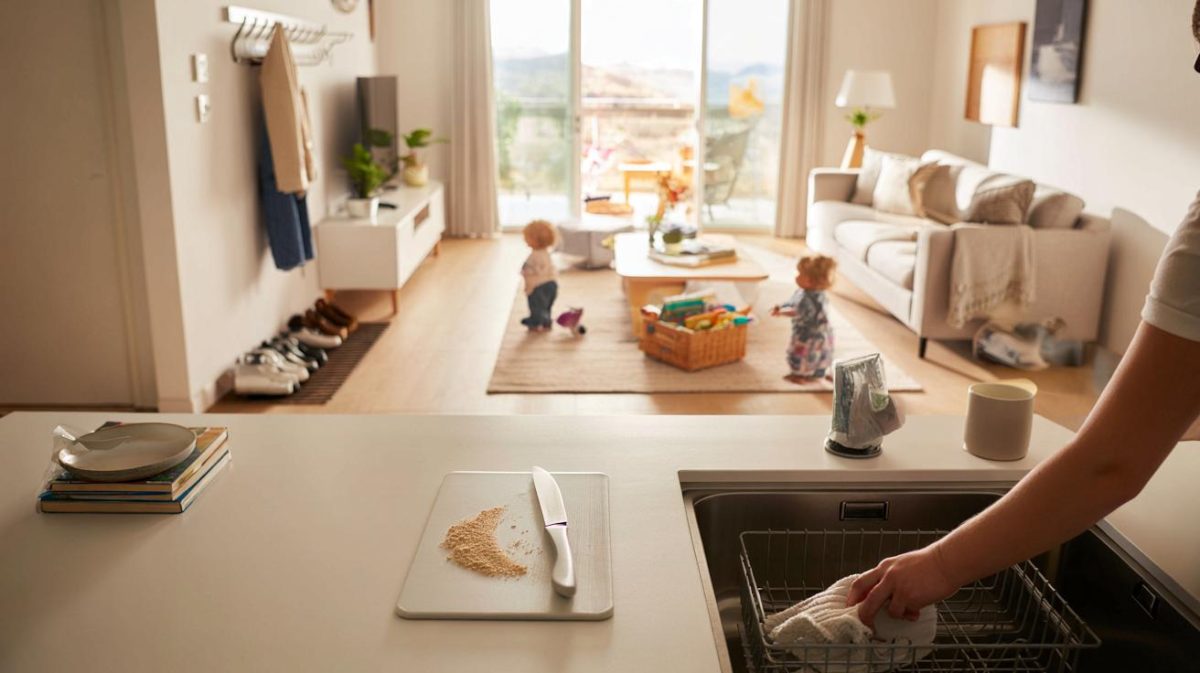
1. Kitchen: empty sink, wipe counter, trash out if it’s full.
2. Living room: put remotes, cushions, and blankets back.
3. Hallway: shoes lined up, keys in the same spot.
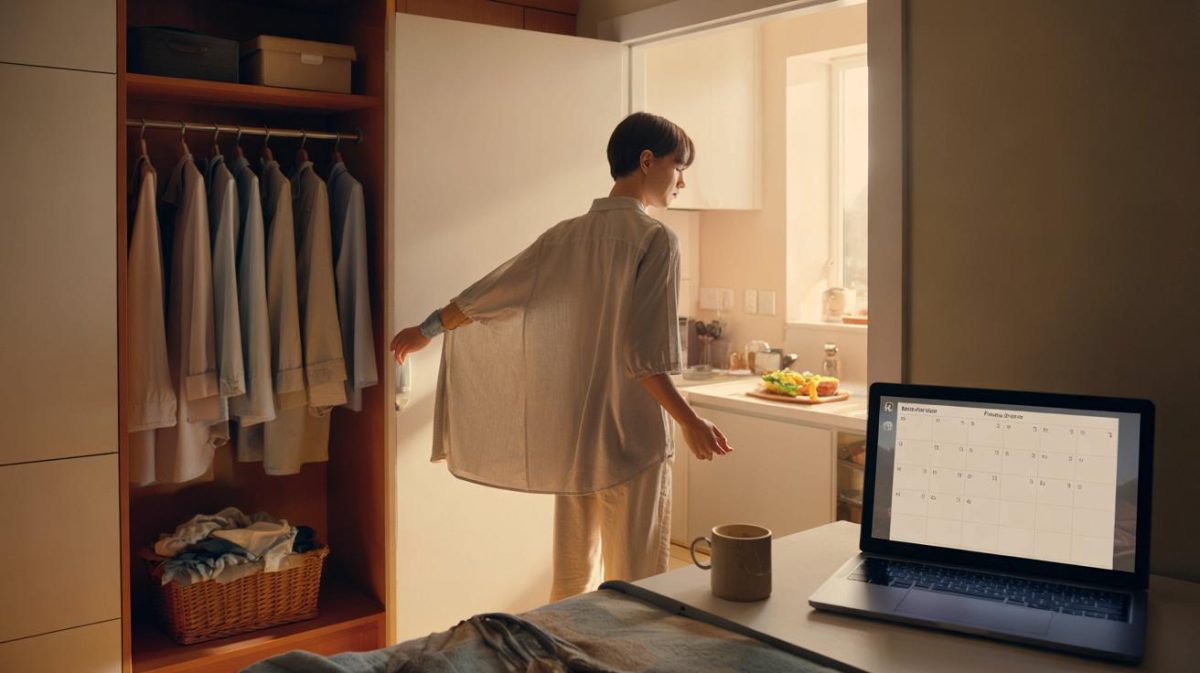
4. Bedroom: clothes off the chair, bed ready to welcome me.
When the timer rings, I stop.
Even if everything isn’t spotless.
The power is in the limit, not the perfection.
The first evenings, I dragged my feet.
Some nights I bargained with myself like a teenager: “Ten minutes, not twenty.”
Let’s be honest: nobody really does this every single day.
There are nights when you come home late, nights when kids are sick, nights when life just says no.
So I created two versions.
The full 20-minute reset, and the 5-minute “bare minimum”:
– Clear sink or at least rinse and stack dishes neatly
– Tidy the sofa
– Put tomorrow’s bag or keys by the door
On the weeks when my energy crashed, I shifted to the 5-minute plan without guilt.
The goal wasn’t discipline for discipline’s sake.
It was simply: don’t abandon future-you entirely.
*We’ve all been there, that moment when you’re staring at a messy room and somehow feel like it says something about you.*
This is where most people get stuck.
Not on the tasks themselves, but on the guilt attached to them.
So I tried something counterintuitive.
Instead of lecturing myself, I started talking to myself the way I’d talk to a friend.
“Okay, today was a lot. You don’t need a perfect apartment. You only need 10 minutes to help tomorrow-you breathe.”
Inside that gentler tone, short actions fit better:
- Folding the blanket instead of washing the windows
- Stacking dishes instead of scrubbing the oven
- Putting shoes in a row instead of sorting every drawer
- Wiping the table instead of reorganizing the pantry
One plain-truth sentence kept circling in my head: **cleaning gets easier when we stop turning it into a moral test.**
Once the shame drops, the sponge feels a lot lighter.
A calmer next morning starts the night before
After a month of this evening ritual, something odd happened.
I started wanting to clean earlier.
Because the end of the day wasn’t an open question anymore, my brain stopped arguing with chores all afternoon.
There was less of that mental background noise: “I should tidy. I’ll do it later. Ugh, I don’t want to.”
I knew there would be a short, predictable reset before bed.
That simple certainty made daytime mess feel temporary, not suffocating.
Sometimes I even did a few things ahead of the ritual, just to make life easier for the future reset.
Lazy motivation, in the best way.
The morning effects were even stronger.
Walking into a semi-ordered space changed how I moved through the first hour of my day.
No hunting for keys under a pile of mail.
No stepping on that one rogue sock.
No starting work with yesterday’s mug staring at me like a disappointed teacher.
I had fewer micro-annoyances, and that freed up energy for other decisions.
What to wear.
What to eat.
What actually mattered in my day.
The place didn’t have to look like a magazine.
It just had to stop actively fighting against me.
There’s also something quietly powerful in ending the day with a small, visible win.
Not a big achievement, not a major life milestone.
Just the sight of a cleared counter, a made bed, a living room that looks like someone cares about it.
It sends a message: you’re allowed to be tired and still create a bit of order.
You don’t have to choose between “I do nothing” and “I deep-clean my entire life tonight.”
If there’s one idea that stayed with me, it’s this: **the end of your day doesn’t need to be glamorous, it just needs to be intentional.**
A quiet, ordinary decision: this is how I leave my space before I rest.
The details of that decision are different for everyone.
The relief it brings is surprisingly similar.
| Key point | Detail | Value for the reader |
|---|---|---|
| Closing ritual | 20-minute evening reset with a clear sequence of small tasks | Gives structure, reduces decision fatigue, and makes cleaning feel lighter |
| Flexible versions | Full ritual + 5-minute bare-minimum option for tough days | Prevents all-or-nothing thinking and keeps some progress going |
| Future-you mindset | Acting out of kindness for the next morning, not guilt about the current mess | Transforms cleaning from punishment into a small daily gift |
FAQ:
- What if I’m too exhausted at night to do any cleaning?Start with a 3–5 minute version: rinse dishes, clear one surface, prepare tomorrow’s bag. Tiny consistency beats rare, heroic deep-cleans.
- Do I have to follow the 20-minute timer exactly?No. Use it as a frame, not a prison. Some days it will be 10 minutes, some days 25. The key is having a defined “closing” moment.
- My place is already very messy. Where do I begin?Pick one “anchor zone” for your closing ritual, like the sink or coffee table. Keep that area reset every night, and let order spread from there over time.
- What if I live with other people who don’t cooperate?Define your own non-negotiables (for example, your desk, a corner of the living room) and invite others to join, rather than nag. Shared rituals grow faster than shared complaints.
- Can this work if my schedule changes every day?Yes, connect the ritual to an event, not a specific hour: after your last meal, after the kids sleep, or after you turn off the TV. The trigger matters more than the clock.