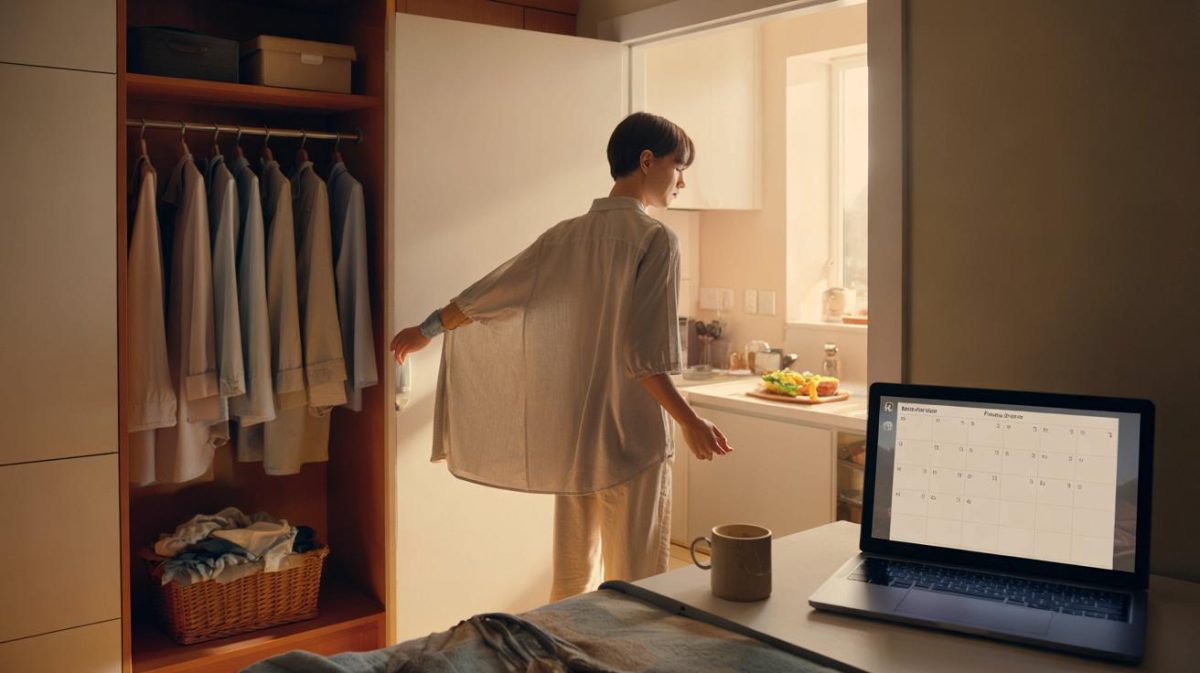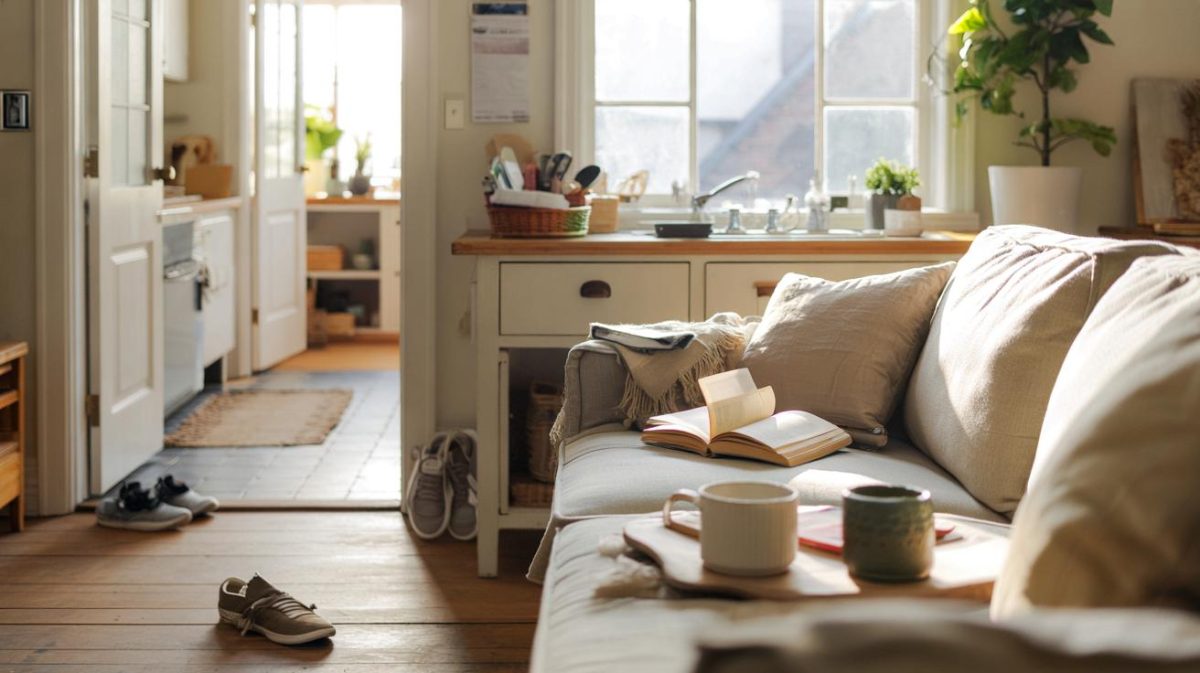
It often starts with something tiny. The way you rinse a mug and leave it “just for a second” in the sink. The wet towel you hang half-folded over the chair “because you’re in a rush”. The shoes you line up by the door… or don’t.
These gestures feel harmless, almost invisible. Yet walk into a home and you can read them everywhere: in the pile of “almost folded” laundry, the sticky countertop that’s “not that bad”, the bathroom mirror dotted with toothpaste.
One quiet cleaning behavior is setting the tone for all of this.
You probably repeat it every single day without even naming it.
The invisible habit that decides if your home feels calm or chaotic
Watch yourself right after you use something at home. Not ten minutes later. Not on Sunday during the “big clean.” The exact two seconds after you finish cooking, showering, getting dressed, opening a package.
That micro-moment is the quiet behavior that shapes your entire home: do you reset the space, or do you move on and tell yourself “I’ll deal with it later”?
This split-second reflex is rarely conscious. It’s not glamorous like a full-on declutter session. Yet it silently writes the story of your living room, your kitchen, your bedroom. Over time, “later” becomes a style of living.
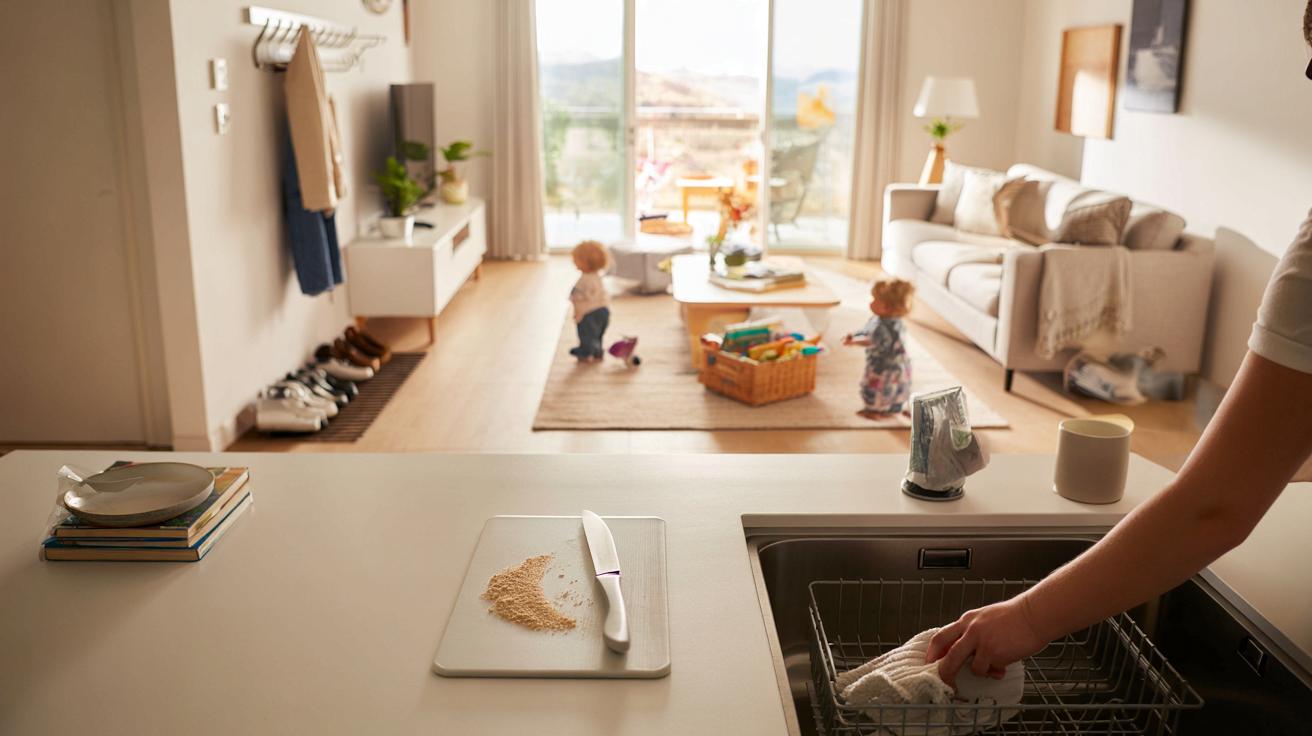
Think of a friend whose home always feels strangely peaceful, even on a Tuesday night. There are kids’ toys around, a bit of life on the table, maybe a stray sock or two. Yet the place doesn’t feel messy.
If you watch closely, you’ll notice a pattern. They finish making a sandwich and wipe the crumbs right away. They close drawers completely. They hang the coat instead of tossing it on the sofa. No drama, no deep-cleaning playlist, just tiny resets on autopilot.
Now picture the opposite home, where everything gets postponed. Same activities, same amount of stuff. But the “later pile” grows by the hour until it feels overwhelming. Nothing is really dirty, yet nothing fully rests.
➡️ “I work as a technical coordinator and make $68,400 a year”
➡️ I changed the way I end my day and cleaning became easier
➡️ “This warm dinner is what I cook when staying in feels right”
➡️ The subtle impact of background noise on mental energy
➡️ I realized my home stayed cleaner once I accepted imperfection
➡️ This simple habit helps you reset between busy moments
➡️ This is why some interactions feel emotionally heavy
➡️ “I thought breaks were enough,” this habit made them effective
That’s the quiet power of the “reset after use” habit. It compresses mess into manageable seconds, instead of letting it snowball into weekend-eating chaos. Psychologists sometimes call this reducing “visual noise”: fewer abandoned objects equals less background stress for your brain.
When the house is full of half-finished actions — drawer half-open, dishes half-rinsed, bed half-made — your mind never fully switches off. You’re constantly reminded of what you haven’t done.
Flip that script, even slightly, and the whole atmosphere shifts. The same home, the same budget, the same square meters… but a completely different feeling of control.
How to train yourself to “reset after use” without turning into a robot
Start with one zone only. Not your whole life. Just the kitchen counter, or the bathroom sink, or your bedside table. Decide that in this one place, you will always do a tiny reset before leaving.
In practice, that might mean putting the knife straight into the dishwasher, wiping the splash near the faucet, or stacking the book and glasses instead of leaving them sprawled. Fifteen seconds, maybe thirty, no more.
Link it to something you already do: kettle on, wipe the spill; phone on charger, place keys in the bowl. The magic is repetition. Your goal isn’t perfection, it’s building a small, almost boring reflex that quietly protects your space.
Most people fail with cleaning habits because they aim for grand, Instagram-level transformation. They declare “This weekend I’m reorganizing everything” and then crash into exhaustion by Saturday at 4 p.m.
The reset-after-use habit is the opposite. Tiny, not impressive, often invisible even to your partner or roommates. Which can feel a bit unfair when no one says thank you.
So be gentle with yourself. You will forget. You will leave mugs around. You will wake up some days and the kitchen will look like a crime scene. *That doesn’t mean the habit is broken.* It just means you’re a human living in a home, not a showroom.
“The state of your home is rarely about one big clean. It’s about the things you quietly decide not to postpone.”
Think of this behavior as your quiet script for the day. To keep it real, anchor it in three low-effort checkpoints:
- Morning micro-reset: bed roughly made, pajamas away, bathroom sink cleared.
- Midday sweep: dishes not abandoned, one surface wiped, trash actually taken out.
- Evening landing: sofa decluttered, counters reset, one “hot spot” cooled down.
Let’s be honest: nobody really does this every single day. But returning to these checkpoints more often than not is what slowly rewrites how your home feels.
When your home starts reflecting who you are today, not who you were yesterday
There’s a quiet moment that happens when this reset habit finally starts to stick. You walk into your kitchen after work and realize you’re not greeted by yesterday’s chaos. Just a space waiting for you, not accusing you.
Something loosens in your shoulders. You put your bag down a bit more gently. You might even light a candle for no reason other than: there’s actually room for it. Your home stops feeling like a backlog of tasks and becomes a backdrop for what you want to do now.
This isn’t about being ultra-organized or obsessively clean. It’s about micro-respect for your future self. Today you hang the coat, so tomorrow-you doesn’t trip over it. Tonight you clear the sink, so morning-you doesn’t start the day already annoyed.
Over weeks, the story of your space changes. Surfaces become available for projects, not piles. Floors invite you to stretch or play or dance. You start to see that this one modest behavior — resetting after use — has been quietly rewriting the whole script of your home.
And once you notice that, it’s hard to unsee it.
| Key point | Detail | Value for the reader |
|---|---|---|
| Focus on micro-resets | Act in the 2 seconds after using a space or object | Reduces chaos before it starts |
| Start with one zone | Choose a single surface or room to “always reset” | Makes the habit realistic and sustainable |
| Protect future-you | See each reset as a favor to your next self | Builds motivation and a calmer daily rhythm |
FAQ:
- What exactly is “resetting after use”?It’s the habit of returning a space to neutral right after you use it: putting things back, wiping quick messes, closing what you opened, so the next moment starts fresh.
- Isn’t this just being overly tidy?Not really. The idea isn’t perfection, it’s reducing future work. You’re shrinking mess into seconds instead of letting it pile up into hours.
- How long should a reset take?For daily life, think 15–60 seconds. Longer than that turns it into a chore. The power is in speed and consistency, not depth.
- What if I live with messy people?Pick personal zones you control (desk, bedside, part of the kitchen). Your habits still lower the overall chaos and often nudge others over time.
- Can this replace big cleaning days?You’ll still need occasional deeper cleans, but they become lighter and less stressful because there’s no mountain of postponed clutter waiting for you.