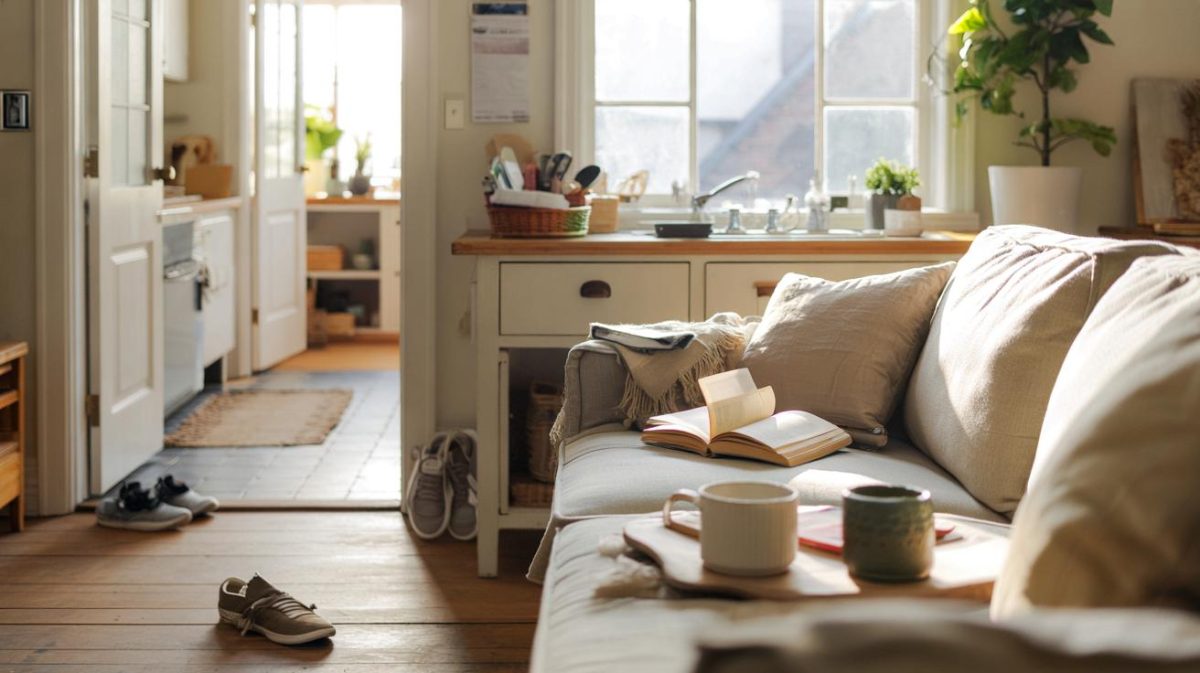
You close the vacuum cleaner with a satisfying click, wipe the last countertop, smooth the sofa cushions, and step back. The house smells like citrus spray and hot dust from the hoover. For a brief second, you feel that quiet burst of pride: today, you were on top of things. Then your eye catches a streak on the mirror. A pile of mail you ignored. Crumbs already back on the table because someone grabbed a snack.
The more you look, the more tiny flaws seem to appear out of nowhere.
Your back aches, your hands are dry, and yet the whole place still feels… off. Not dirty. Just not quite clean.
What if the problem isn’t your effort, but the way your brain sees your home?
Why a spotless house never feels really “done”
There’s a strange moment that happens as soon as you finish cleaning. Ten minutes ago you were surrounded by chaos, now the floors are clear, the sink is shining, the laundry’s folded. Still, your brain instantly starts scanning for what’s wrong. Just like that, your hard work gets swallowed by a mental list of what you “should” have done.
You notice the fingerprints you missed on the fridge door. The toy behind the curtain. The dust line you only see when the sun hits a certain angle. Cleaning turns into a moving target. The closer you get, the further “truly clean” seems to move away.
Imagine this scene. You spend your entire Saturday cleaning for guests. You scrub the bathroom tiles, wash the windows, deep clean the oven, even reorganize the hallway closet. By evening, your feet hurt and you’re slightly proud of yourself. Then a friend walks in, drops a bag by the door, and says, “Wow, your place is so cozy.”
Cozy. Not “impeccable”. Not “spotless”. Just… cozy. Part of you is happy. Another part feels a bit cheated, as if all that effort still wasn’t enough to change the story of your home. So you start pointing out what you didn’t finish, almost apologizing for invisible flaws.
That strange dissatisfaction isn’t random. Your brain is wired to notice what’s wrong faster than what’s right. It’s a survival trick that once helped us scan for danger, and now it just quietly ruins our Saturdays. You also live in your home every day, which means you see every stain, every scuff, every drawer that doesn’t close smoothly.
Over time, your standard of “clean” climbs higher and higher, while real life stays messy and alive. *So your house can technically be clean, yet never feel clean enough*, simply because your expectations have slipped into fantasy territory.
➡️ If you feel unsettled when things go smoothly, psychology explains the inner expectation
➡️ This baked dinner delivers warmth more than excitement
➡️ This is why some interactions feel emotionally heavy
➡️ This is the easiest way to remember what you need when leaving home
➡️ “I finally understood why my budget failed when I crossed the $50,000 income mark”
➡️ “This warm dinner is what I cook when staying in feels right”
➡️ If your home feels crowded, this placement change helps
➡️ A simple way to avoid decision fatigue before it even starts
The hidden “dirt” that makes your space feel messy
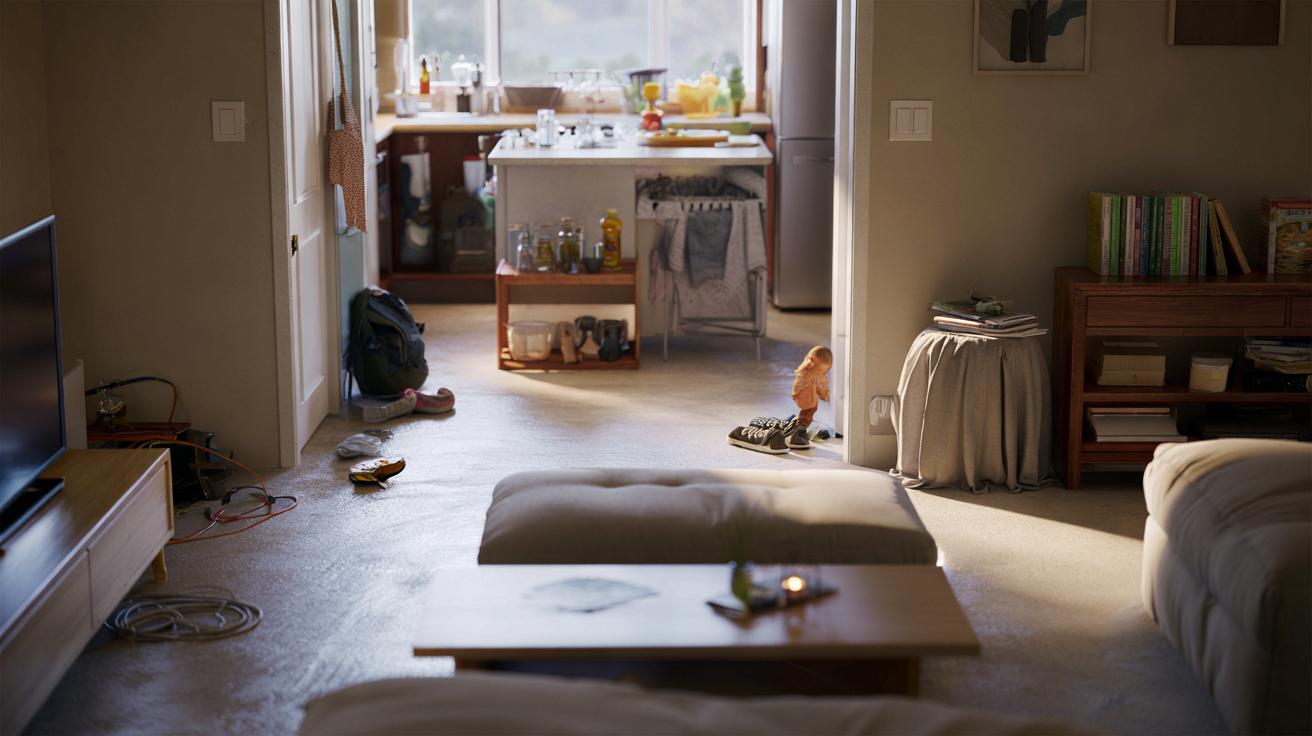
One quiet shift changes everything: start treating visual noise like dirt. Not just dust or crumbs, but the random, loud stuff your eyes trip over. That pile of shoes by the door. The cable nest behind the TV. The half-finished craft project on the table. These things may be technically clean, but they keep your brain on alert.
A house can be disinfected and still feel chaotic if the eye never gets a place to rest. That restless feeling? It reads as “not truly clean”, even when you’ve just scrubbed every surface.
Picture a kitchen where every surface is wiped and disinfected. The sink is empty, the stove is spotless, the trash is out. On paper, that’s a clean kitchen. Now add a drying rack full of mismatched plastic containers, a pile of mail, five condiments sitting out, a school notice pinned with tape, and a random plant on the corner.
Nothing here is dirty. But your eye jumps around with no pause. You stand in that room and feel slightly tense without knowing why. Then you think, “This place is never really clean.” The truth is, you’re fighting clutter, not hygiene. Your mop can’t fix what your cupboards refuse to hold.
Once you see it, you can’t unsee it. Our homes are overloaded with objects, habits, and visual “interruptions”. Open shelving full of different colors. Kids’ artwork taped over every surface. Crowded countertops that never stay tidy because there’s nowhere for anything to go.
Your brain reads all of this as unfinished work. Every item is a loose end. So even after a full day of cleaning, a crowded room still whispers “not done” into your nervous system. That constant low-level stress is why you collapse on the couch and still feel on duty.
Cleaning less, feeling cleaner: how to shift the game
There’s one simple method that changes the whole atmosphere of a room: choose one “quiet zone” per space and protect it fiercely. Not the whole room, not the entire house, just one surface that stays clear most of the time. A dining table. A coffee table. A kitchen island.
When your brain sees one consistently calm area, it relaxes. You give yourself a visible sign that something is under control. Then when the rest of the house explodes, you don’t feel like you’re starting from zero again.
A lot of us fall into the same trap: we wait for a mythical “full day to clean” that almost never appears. Then when it finally does, we expect to fix everything at once. That pressure makes you jump from room to room, half-finishing tasks and ending up with a house that’s technically cleaner, but emotionally overwhelming.
Let’s be honest: nobody really does this every single day. You’re not a hotel staff. You live here, other people live here, life drips everywhere. So instead of chasing an all-or-nothing clean, try choosing one micro-goal for the day: “Bathroom sink looks like a hotel”, or “Hallway floor is clear”. Small, specific wins feel more like success than one giant, vague failure.
Sometimes the problem isn’t that your house is dirty. It’s that you’re holding it to a standard designed for staged photos, not living humans.
- Pick your “calm corner”: One shelf, one table, or one countertop that stays mostly empty.
- Create a “landing zone” by the door: hooks, a tray, and one basket so daily chaos has a home.
- Switch to 10-minute resets: Short bursts after meals instead of marathon cleaning days.
- Hide visual clutter: closed baskets, opaque boxes, doors that actually shut.
- Redefine “clean enough”: Floors clear, dishes under control, bathroom decent. The rest is decor.
Living in a home, not inside a showroom
At some point, you have to decide what story your home is allowed to tell. Is it a showroom that must look untouched at all times, or a place where life leaves traces? The more time we spend scrolling past pristine interiors, the easier it becomes to confuse “photo-ready” with “normal”. Your house is doing things those photos never show: hosting sick days, late-night snacks, Lego explosions, tearful phone calls.
Maybe the reason it never feels truly clean is because you’re judging it in the wrong category.
| Key point | Detail | Value for the reader |
|---|---|---|
| Visual noise matters | Clutter and crowded surfaces make a room feel dirty even when it’s sanitized | Helps you target what actually bothers you instead of endlessly scrubbing |
| Small zones, big relief | Keeping one “calm area” per room changes how your brain reads the whole space | Gives you achievable wins and a daily sense of control |
| Redefine “clean enough” | Shift from perfection to a few clear standards (clear floors, decent bathroom, dishes under control) | Reduces guilt and saves time while keeping your home livable |
FAQ:
- Why does my house look messy even when I tidy every day?Because daily tidying often ignores the real culprit: clutter. If your drawers, cupboards, and closets are full, objects spill onto surfaces and your brain reads that as “mess”, no matter how often you clean.
- How do I stop feeling like I’m cleaning nonstop?Switch from long cleaning sessions to short, focused resets tied to existing routines: after breakfast, after work, before bed. One room, one task, ten minutes.
- Is it normal that my home never looks like the pictures I see online?Yes. Those homes are staged, often lit professionally, and usually photographed in a frozen moment where no one is actually living in them.
- What’s the minimum I can do for my home to feel decent most days?Clear the main floor areas, keep dishes under control, and reset one key surface (like the kitchen counter or coffee table). The rest can rotate.
- How do I let go of guilt about not having a perfectly clean house?Decide your own definition of “clean enough” based on how you live, not on what you see online or heard growing up. Then remind yourself: a lived-in home will always look a little alive.