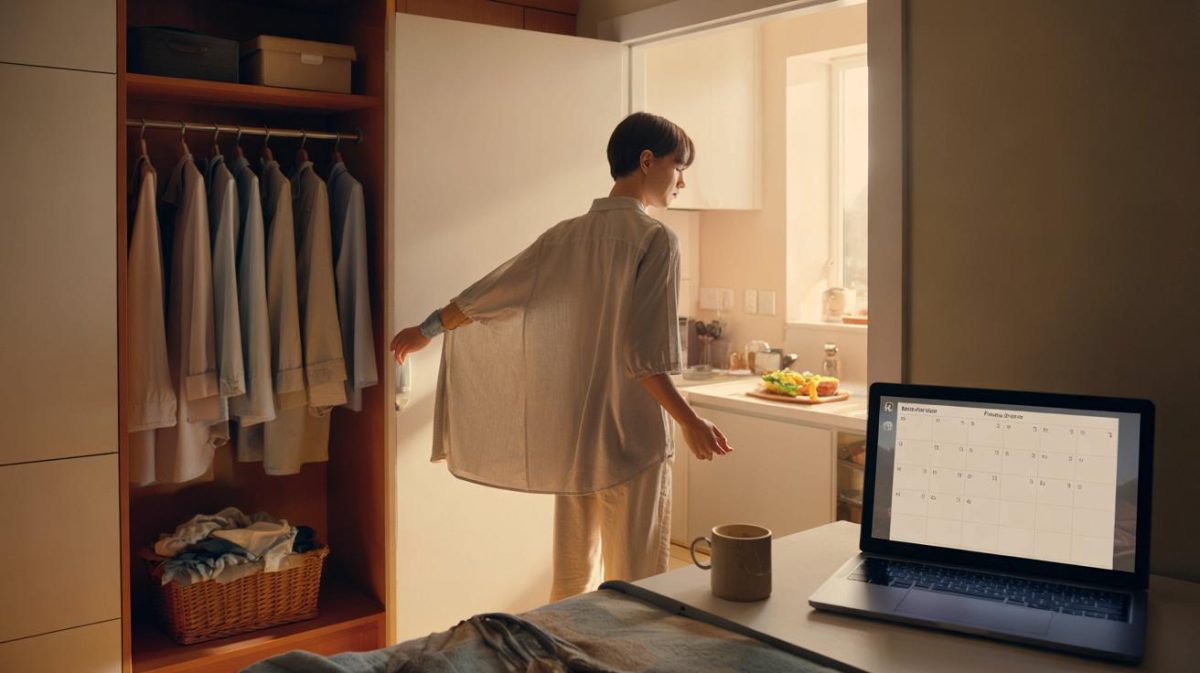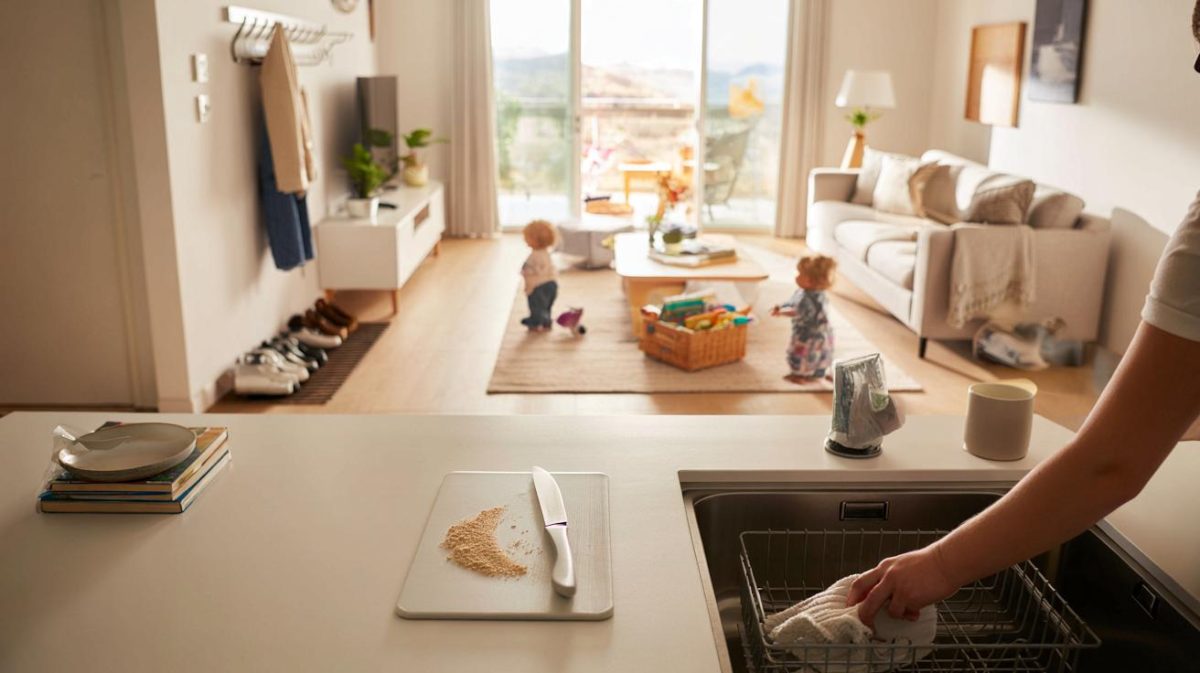
The day I noticed my home was staying cleaner, I was standing in the hallway staring at a pair of sneakers. One was by the door, the other was somehow in the middle of the rug, like it had tried to escape. Old me would have sighed, picked them up, muttered something about “no one respecting the system,” and launched into yet another silent cleaning rage.
This time, I stepped over the rogue sneaker and walked to the kitchen. The counters weren’t spotless, but they were… fine. The sink had a couple of mugs. The living room had a throw blanket bunched up like a sleeping cat. The floor wasn’t gleaming, but there were no mysterious crumbs sticking to my feet.
My home was far from perfect. Yet somehow, it felt tidier than in my “everything must be immaculate” era.
Something had quietly shifted.
When perfect cleaning secretly creates chaos
For years, my standard was simple: if the house wasn’t flawless, it was a disaster. One fingerprint on the mirror, one toy on the floor, and my brain would flash red alert. I’d launch a full cleaning operation, resentful and exhausted, like I was trying to pass an invisible inspection no one had scheduled.
The result? Wild swings. Some days the apartment looked like a magazine shoot. The next, it was a laundry mountain range. I lived in a loop of “deep clean” followed by “total burnout”. My home never seemed to stay tidy for long. My energy didn’t either.
One Sunday crystallized the problem. I spent six hours cleaning: scrubbing skirting boards, reorganizing drawers, even wiping the top of door frames no one has ever looked at. By evening, I was too tired to cook, so we ordered takeout. We ate on the sofa, left the containers on the coffee table, and went to bed.
The next morning, the house looked like it had given up on me. Greasy bags, cups half full, crumbs under the cushions, clothes in a pile where I’d changed in a rush. That deep-clean high had vanished in less than 24 hours. The gap between “perfect” and “lived in” was so big that one messy evening made the whole place feel ruined.
That was the day I realized something quietly cruel: perfection is brittle. The smaller the margin of acceptable “mess,” the more often you feel like you’ve failed. When your standard is “no clutter, no dust, no dishes”, a single cereal bowl feels like a personal attack. You stop seeing “a mostly tidy room with a few things out”. You only see the socks on the floor.
So you wait until you have the time and energy to “do it properly”. Spoiler: that window almost never comes. *This is how homes slide from slightly messy to overwhelming, almost without you noticing.* Perfection doesn’t prevent chaos. It invites it in, then tells you it’s your fault.
The small-shift routine that changed everything
The change started with one tiny rule: “Good enough by eye level.” Not spotless. Not Instagram-ready. Just: if I stand in the doorway and quickly scan the room, does it look calm enough for my brain to breathe? That became my new standard.
➡️ I changed the way I end my day and cleaning became easier
➡️ This is the easiest way to remember what you need when leaving home
➡️ This is why some interactions feel emotionally heavy
➡️ This profession pays modestly at first but becomes extremely lucrative over time
➡️ The cleaning behavior that quietly shapes your entire home
➡️ Gardeners who observe leaf texture catch problems earlier than those watching color
➡️ “I finally understood why my budget failed when I crossed the $50,000 income mark”
➡️ This baked recipe proves that simple cooking can still feel special
I stopped policing corners and focused on what we actually used and saw. Couch, counters, table, floor paths, bathroom sink. Five areas. If those looked “lightly tidy”, I called it a win. Five minutes here, three minutes there, almost like tidying in passing. My energy stopped going into heroic cleaning sessions and started living in the everyday.
Let’s be honest: nobody really does this every single day. There are tired Tuesdays and late Thursdays and Saturdays where the laundry stares back, victorious. That’s fine. What changed is that I no longer waited for motivation to strike. I attached micro-actions to daily habits I already had.
Coffee brewing? I clear the counter space around the machine. Toothbrushing at night? I wipe the sink with a washcloth that’s heading to the laundry anyway. Opening the curtains in the morning? I quickly fold the blanket and stack the remotes. These gestures take seconds, but they stop mess from forming layers.
The biggest mental shift was dropping the shame. For years, I thought struggle with clutter meant I was lazy or disorganized. Once I started talking to friends, I realized most of us were quietly drowning in the same “all or nothing” mindset.
“The day I stopped aiming for a showroom house,” a friend told me, “was the first day my home started to feel like it actually belonged to me, not some imaginary guest who never shows up.”
I began using a short, forgiving checklist, not as a law, but as a gentle anchor:
- Can I walk through each room without stepping over something?
- Are the main surfaces (table, counters, sofa) mostly clear?
- Is there a home for the three main clutter culprits: mail, clothes, random objects?
- Did I do one tiny thing for Future Me today? (Load of laundry, quick trash run, cleared sink)
- Is there at least one cozy corner that feels inviting right now?
This list is not a scorecard. It’s a way to notice small wins instead of only seeing what’s left undone.
Living in a “good enough” home that actually stays clean
Something strange happens when you accept imperfection as the baseline: upkeep stops feeling like punishment. A home that is allowed to look lived in doesn’t need dramatic rescue missions. It needs small, almost boring acts of care. And those are much easier to repeat.
I started noticing that the mess that used to send me into a spiral was now just… data. Oh, there are shoes in the hall? We need a better basket there. Coats keep ending up on chairs? The hooks are too high, or too far. When your goal is not “no mess ever” but “mess that’s easy to reset”, you design your home differently.
I also stopped cleaning “for appearances” and started cleaning “for feeling”. That changed the order of my priorities. Before, I might have obsessively dusted shelves I barely looked at, then collapsed before dealing with the living room floor I actually walked on. Now:
If a task changes how the space feels in under three minutes, it goes to the top: opening a window, clearing a table, throwing out visible trash, fluffing a pillow, emptying the sink. These are mood-shifters. They trick your brain into believing, “This place isn’t a disaster, it’s just mid-reset.” And when a home feels mid-reset, you’re far more likely to keep going.
What surprised me most wasn’t the visual difference. It was the mental quiet. The weight of guilt I carried about my home got lighter, day by day. I stopped apologizing when people visited. I stopped narrating my own failures in my head every time I saw a pile of laundry.
*Perfection had been the loudest voice in the room; once it left, there was space for something else.* There was room for games on the floor that didn’t get packed away instantly. For a book half-open on the armrest. For an evening where the dishes waited until morning, and no one declared it a moral collapse. A “good enough” home isn’t the absence of mess. It’s the presence of mercy.
| Key point | Detail | Value for the reader |
|---|---|---|
| Shift the standard | Move from “perfect” to “good enough by eye level” | Reduces pressure while still keeping spaces visually calm |
| Use micro-habits | Attach tiny cleaning actions to things you already do | Makes tidying almost automatic, without big time blocks |
| Design for easy resets | Create simple homes for clutter and focus on high-impact areas | Keeps the home manageable and prevents overwhelm |
FAQ:
- How do I start accepting an imperfect home without feeling like I’m “letting go”?Begin with one room or one surface and set a “good enough” goal: clear-ish, walkable, comfortable. Notice how your stress shifts when it’s 80% done instead of 100%. That feeling is your new reference point.
- Won’t accepting imperfection make me more messy over time?Strangely, no. Most people clean more consistently once the pressure drops. When the bar is reachable, you touch it more often. The extremes of “spotless” and “disaster” start to disappear.
- What if my partner or family doesn’t share this mindset?Pick shared zones (living room, kitchen) and agree on a simple baseline: clear couch, usable table, no dishes left out overnight. Private rooms can follow their own rules, which reduces conflict.
- How do I handle guilt about not having a picture-perfect home?Ask yourself whose eyes you’re decorating for. Imaginary visitors from design magazines don’t live in your home; you do. Prioritize how your space feels to your actual body at 7 a.m. on a weekday, not to an invisible audience.
- Is there a quick routine for days when I’m overwhelmed?Try a 10-minute reset: pick music, set a timer, and rotate through three spots only—sink, sofa, and main walkway. When the timer stops, you stop. The point is relief, not perfection.