The bag had been sitting in the corner of the shed for months, a dull, brown sack with a handwritten label: “Compost – Spring”. On the first mild morning of March, Léa finally dragged it out, fingers numb, breath making little clouds in the cold air. She slit it open with a kitchen knife, and suddenly the garden smelled like a forest floor after rain.
For a second, nothing happened. Just dark crumbs between her fingers. No miracle. No instant green.
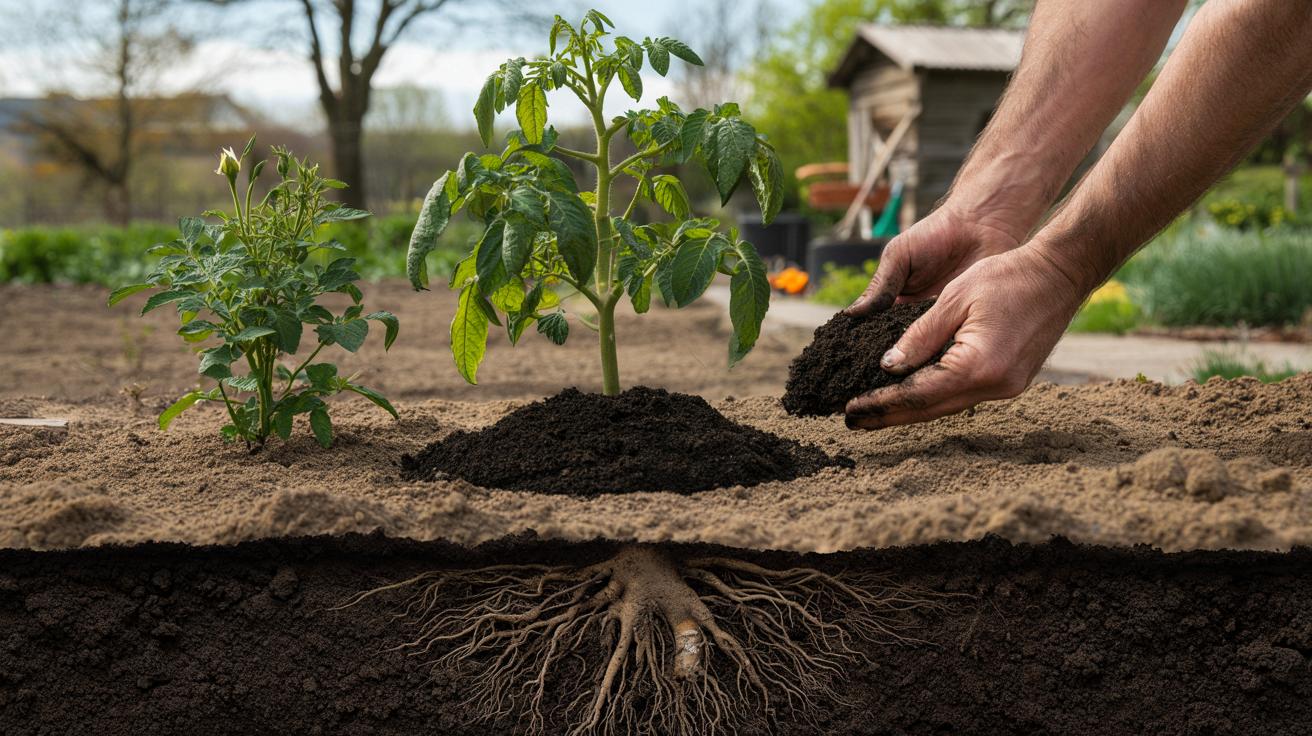
Yet she kept spreading this slow, earthy powder around her tired roses and tomato beds.
Two weeks later, new shoots were thicker, leaves a deeper green, and the stems didn’t bend after the first gust of wind.
Something was happening underground.
This “lazy” fertilizer that quietly transforms your soil
Garden centers love to promise “instant results” in shiny packaging. Balls of blue granules, liquid concentrates with aggressive slogans, magic sprays that supposedly make your plants explode with growth. We’ve all fallen for at least one of these at some point.
Then there’s the opposite: the discreet, often homemade fertilizer that works slowly and almost invisibly. Compost, well-rotted manure, vermicompost, leaf mold. No fireworks, no chemical smell. Just a patient, steady release of nutrients that feeds plants from the roots up.
It’s the gardening equivalent of a slow-cooked stew. Nothing catchy on the surface, but the kind of food that keeps you going all day.
Take Marc, for example, who moved into a suburban house with soil like concrete. His lawn was patchy, his hydrangeas yellow, and every summer his tomatoes collapsed as soon as the heat arrived. He tried everything: fast-acting pellets, foliar sprays, even those neon-green liquids that smell like a science lab.
One autumn, out of frustration, he started a simple compost heap behind the garage. Kitchen scraps, dry leaves, a bit of shredded cardboard. He barely touched it all winter, then, in April, he spread that crumbly black “waste” around his beds. No instant miracle. But by August, his tomatoes were standing like little trees, and the hydrangeas had turned a deep, impossible blue.
The only real change? This slow, natural fertilizer working quietly underground.
The magic of these slow fertilizers isn’t really magic at all. They don’t just feed the plant, they feed the soil. Inside that dark, almost anonymous material, billions of microorganisms start breaking everything down. As they work, they release nitrogen, phosphorus, potassium and a swarm of trace elements very gradually.
➡️ This profession pays modestly at first but becomes extremely lucrative over time
➡️ The subtle impact of background noise on mental energy
➡️ If you feel unsettled when things go smoothly, psychology explains the inner expectation
➡️ “I thought breaks were enough,” this habit made them effective
➡️ If your routine feels heavier than necessary, this explains why
➡️ “I finally understood why my budget failed when I crossed the $50,000 income mark”
➡️ I made this comforting recipe with leftovers and it still tasted incredible
➡️ This baked recipe proves that simple cooking can still feel special
Roots love this rhythm. Instead of brutal surges of nutrients, they get a gentle, continuous buffet. The soil structure shifts, too: more air pockets, better water retention, less compaction. You end up with roots that go deeper, not just wider.
Plain truth: a plant with shallow, lazy roots will always be fragile, no matter how much you spray on its leaves.
How to use slow natural fertilizer so it really pays off
The simplest method is also the one people underestimate. Spread a 2–3 cm layer of compost or well-rotted manure on the soil surface, around, not against, the stems. This is called surface mulching. Then let time and rain do part of the job. Earthworms will pull that material down, mixing it into the first few centimeters of soil.
You can repeat this once or twice a year: in early spring for a boost before growth starts, and in autumn to rebuild the soil after the season. For pots and planters, mix 20–30% compost into the potting soil when you repot. For older containers, scratch a handful into the surface.
It looks almost too simple. That’s precisely why it works.
Most people who say “compost doesn’t work for me” have done one of three things. They’ve used it too late, expecting a quick fix for a dying plant. They’ve buried it too deep, smothering the soil life that needs air. Or they’ve dumped huge amounts all at once, creating a suffocating layer.
Think of this fertilizer like seasoning in the kitchen. A regular pinch at the right time does more than a whole handful thrown in at the end. Stay light around seedlings and young plants; their roots are tender and don’t need to be drowned. For houseplants, go even softer: a thin ring around the edge of the pot, not packed against the stem.
Let’s be honest: nobody really sifts compost into perfect textures every single day.
“I stopped fighting my soil,” says Ana, a balcony gardener in the city. “Once I started feeding it slowly with my own kitchen scraps turned into compost, the plants stopped collapsing every summer. They just… held on better.”
- Start small: One bucket of compost is enough for several balcony planters.
- Think long-term: Spread in autumn to prepare next spring’s roots.
- Keep it alive: never cover your soil with bare plastic; mulch instead.
- Go local: use your own compost, worm bin, or a neighbor’s, not just bagged products.
- Watch the signs: sturdier stems and deeper color often mean the roots feel good.
Why this slow path quietly wins over time
What changes when you choose a slow, natural fertilizer isn’t just the color of your leaves. It’s your relationship with the garden. You stop expecting overnight miracles and start watching for small, steady improvements. The soil becomes something alive, a partner rather than a simple support.
After a year or two of this rhythm, many gardeners notice something subtle. Plants bounce back faster after storms or a dry spell. New seedlings take hold more easily. Pests do less damage because plants aren’t constantly stressed. *You feel less like a firefighter and more like a quiet caretaker.*
There’s also a quiet satisfaction in transforming everyday waste into future flowers and vegetables. Coffee grounds, wilted lettuce, apple cores: all of it, once composted, comes back as strength in the roots. The cycle closes in a very concrete way.
Some neighbors will keep asking for the name of “that product” you used. You might just smile, point to your compost bin, and let them discover that not all powerful fertilizers come with a label.
| Key point | Detail | Value for the reader |
|---|---|---|
| Slow fertilizers feed the soil first | Compost and similar materials energize microbes and improve structure | Plants grow sturdier, with deeper, more resilient root systems |
| Regular light applications beat rare heavy doses | Thin layers once or twice a year instead of one massive dump | Less risk of suffocating roots and wasting nutrients |
| Homemade sources are often enough | Kitchen scraps and garden waste can be turned into compost | Saves money, reduces waste, and builds long-term fertility at home |
FAQ:
- Question 1How long does natural fertilizer like compost take to show visible effects?
- Question 2Can I burn my plants by adding too much slow, organic fertilizer?
- Question 3Is slow fertilizer enough for tomatoes, roses, and other “greedy” plants?
- Question 4What if I don’t have space for a big compost heap?
- Question 5Can I use this type of fertilizer for indoor plants as well?