The fridge door stared back at me like a guilty conscience. Half a roasted chicken. A bowl of lonely peas. Cold rice in a plastic box, edges dried out just enough to look unappealing. It was the kind of Thursday night when you’re tired, slightly grumpy, and dangerously close to ordering takeaway you can’t really justify.
I stood there, hand on the door, wondering if the leftovers were basically a culinary failure, or a quiet little opportunity. The kitchen was silent, but something in me woke up. A pan, a knife, a bit of butter.
Twenty minutes later, the smell in my tiny apartment could have passed for a Sunday family lunch.
And that’s when I realised: this accidental recipe was actually incredible.
Turning scrap food into real comfort
We talk a lot about “meal prep” and “zero waste”, but most of us still have that forgotten Tupperware graveyard in the back of the fridge. Bits of meals that no longer look like food, let alone dinner. They’re too good to throw away, not exciting enough to reheat as-is.
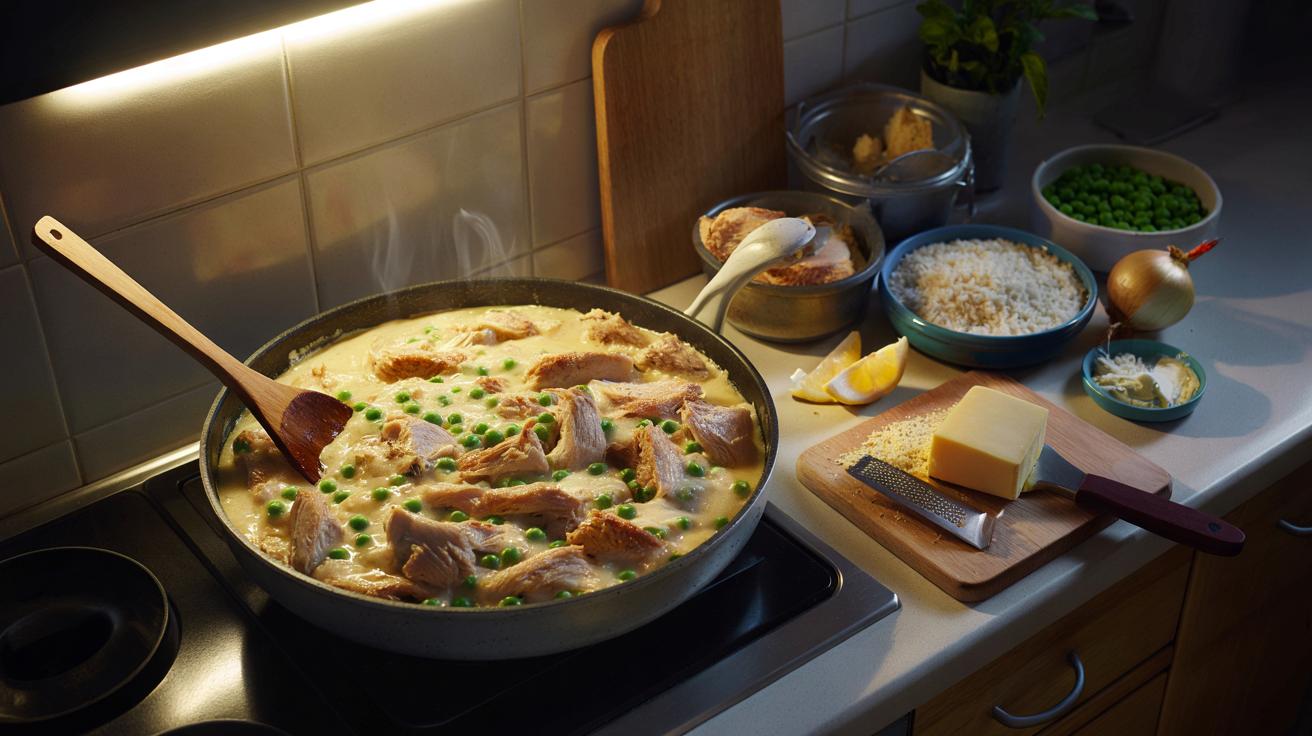
That night, staring at my leftovers, I didn’t follow a recipe. I followed my nose. I shredded the chicken, softened an onion, added rice, peas, a splash of cream, a little stock cube, a handful of grated cheese. Nothing fancy, nothing measured. Yet the pan started to look like something you’d proudly bring to the table.
We’ve all been there, that moment when you’re “too tired to cook” but also vaguely ashamed to waste food. That tension is exactly where this comforting recipe was born. The kind you throw together wearing socks that don’t match, hair in a half-fallen bun, phone buzzing with yet another notification you ignore.
The rice went from stiff to silky. The chicken took on a second life, coated in creamy sauce. The peas suddenly made sense, little green dots of freshness amid the beige. I ate straight from the bowl, leaning on the counter, feeling more nourished than on nights I spend an hour cooking something fancy.
What happened in that pan wasn’t magic, it was structure. Leftovers work when you think less in terms of “dish names” and more in “roles”: something starchy, something protein, something creamy, something punchy. Rice or pasta or potatoes. Chicken, beans, tofu. Cream, yogurt, or just a knob of butter. Lemon, mustard, herbs, or cheese to wake it all up.
Once you see it like that, your fridge stops being a chaotic museum of half-eaten meals. It turns into a toolbox. You’re not reheating old food, you’re building a new dish on a solid, already-cooked foundation. *That’s why the result tastes richer than starting from scratch.*
➡️ Gardeners who observe leaf texture catch problems earlier than those watching color
➡️ This natural fertilizer works slowly but strengthens plants from the roots up
➡️ I changed the way I end my day and cleaning became easier
➡️ If your routine feels heavier than necessary, this explains why
➡️ “This warm dinner is what I cook when staying in feels right”
➡️ This simple habit helps you reset between busy moments
➡️ This baked recipe proves that simple cooking can still feel special
➡️ This is why some interactions feel emotionally heavy
The tiny moves that change everything
The real shift happens before the pan hits the heat. I pulled everything out of the fridge and actually looked at it under the kitchen light. No shame, no “this is ugly”, no guilt. Just ingredients. Then I asked three questions: What can I chop small? What can I fry until it smells amazing? What can melt?
First move: I finely diced half an onion and let it cook slowly in a bit of butter and oil. This is the backstage crew of any comforting leftover dish. While that softened, I shredded the chicken so there were no big, sad chunks, just tender little ribbons ready to soak up flavor.
Next, I “revived” the rice. Straight from the fridge, it was clumpy and dry. Classic leftover problem. I broke it up with my fingers before adding it to the pan, then poured over a splash of water and a spoonful of cream. If you’ve ever dumped cold rice into a pan and ended up with sticky chaos, you know the pain.
Let’s be honest: nobody really does this every single day. Most nights, we just microwave the box and tolerate the result. But taking those extra two minutes to loosen the grains, add moisture, and give everything time on low heat changes both texture and mood.
I seasoned aggressively. Not in a chef-y way, just in a “this needs to taste like something” way. Salt, black pepper, garlic powder, a pinch of smoked paprika. Then came the detail that made the dish feel intentional, not accidental: I slid in a handful of grated cheese and a squeeze of lemon. The cheese melted into the cream, turning everything into a loose, risotto-like hug. The lemon cut through the richness so it didn’t feel heavy.
That’s when the thought hit me: leftovers aren’t the problem. Our lack of curiosity is.
- Start with a base of onion or garlic softened in fat.
- Break up cold starch (rice, pasta, potatoes) with your hands first.
- Add a little liquid: water, stock, milk, or cream.
- Layer flavor with salt, acid (lemon, vinegar), and something umami (cheese, soy, mustard).
- Finish with freshness: herbs, pepper, a drizzle of olive oil, or even a squeeze of lemon.
From random fridge raid to personal ritual
That throw-together dinner has become a quiet ritual in my week. Not a recipe I follow line by line, more like a template I improvise around. Sometimes it’s roasted vegetables and couscous with chickpeas and feta, all tumbled into a pan with a spoon of harissa. Other times it’s pasta, torn ham, frozen peas, and a hurried béchamel that somehow tastes like childhood.
What surprises me every time isn’t just the flavor. It’s the small, almost private satisfaction of turning “nothing to eat” into a dish you’d serve someone you care about.
There’s a strange intimacy to cooking with leftovers. You see the week you’ve just lived, right there on the shelf: the ambitious batch-cook that lasted two days, the random side dish from a friend’s dinner, the half-eaten salad you swore you’d finish. Turning it all into a new, comforting recipe feels like a gentle way of saying: yes, this week was messy, but it still counts.
It’s not about perfection, or rules, or being that person who never wastes a crumb. It’s about letting your kitchen reflect your real life and still finding something warm, nourishing, and genuinely good at the end of the day.
What if leftover night stopped being a shameful backup plan and became the most creative meal of the week? What combinations have you quietly discovered, alone in your kitchen, that you’ve never told anyone about?
Somewhere between the cold chicken, the sad rice, and that last scoop of peas, there’s a new recipe waiting to happen. And that incredible taste you’re chasing might already be sitting in your fridge, just waiting for a pan, a little heat, and a different way of looking at it.
| Key point | Detail | Value for the reader |
|---|---|---|
| Build a flavor base | Start with onion/garlic in fat, then add leftovers | Transforms bland scraps into a cohesive, tasty dish |
| Revive texture | Break up cold starch and add a bit of liquid and time | Makes rice, pasta, or potatoes creamy instead of dry |
| Finish with balance | Add acid, herbs, or cheese at the end | Turns a random mix into something that feels intentional |
FAQ:
- Can I safely mix different leftovers in one pan?Yes, as long as they’ve all been stored properly and are within 2–3 days in the fridge. Heat everything until steaming hot and use your senses: if something smells off, don’t use it.
- What if my leftovers are really dry?Add a splash of water, stock, milk, or cream, then cover the pan and let it gently simmer. The goal is to rehydrate slowly, not drown the food.
- How do I stop leftover dishes from tasting bland?Season in layers: salt early, then add acid (lemon, vinegar), then something umami like cheese, soy sauce, or mustard. Taste at least twice while cooking.
- Can this work without meat or dairy?Absolutely. Use beans, lentils, or tofu for protein, and rely on olive oil, tahini, or coconut milk for richness. Finish with herbs, spices, or toasted nuts.
- Is it okay to reheat leftovers more than once?Ideally, no. Try to reheat only the portion you’ll eat that time. Repeated cooling and reheating increases the risk of bacteria growth and worsens texture.